ADA Compliant Portable Restrooms at Temporary Events: What the Criteria Say
Temporary occasions move fast. A permit gets authorized, vendors align, fencing enters, power is patched together, and afterwards somebody understands the washroom strategy was treated like a second thought. That is usually the moment when ease of access comes to be urgent instead of intentional.
For guests that utilize wheelchairs, walkers, walking sticks, or who require even more area and assistance, that scramble has real consequences. An inaccessible restroom setup is not a minor hassle. It can indicate an individual leaves early, avoids food and drink, or determines not to attend in any way. If you have actually ever enjoyed a family members circle a crowded occasion looking for an ada obtainable portable bathroom that is in fact useful, not just identified, you understand just how swiftly a preparation miss out on turns into exclusion.
The great news is that the baseline federal criterion is not mysterious. For portable commode services in the USA, the regulating accessibility requirement is the 2010 ADA Criteria for Accessible Design, as analyzed by the united state Gain Access To Board and the Department of Justice. For temporary events, that matters greater than lots of coordinators recognize. "Short-term" does not mean "outside the guidelines."
The requirement that obtains missed most often
When mobile single-user commode systems are given in a collection, at least 5 percent of the systems in each collection need to come. The Accessibility Board has actually explained that this uses also at momentary events.
That one sentence clears an unusual quantity of confusion.
People typically assume there is one event-wide number that can be fixed by going down a single bigger unit someplace on website. That is not exactly how this works when you are taking care of clusters. If an event has numerous washroom collections spread throughout the premises, the 5 percent regulation puts on each collection, not simply the complete count across the residential property. In useful terms, an ada certified mobile bathroom placed at the far side of an event does not repair a hard to reach bank of units near the major stage.
That distinction matters since short-term occasions are often outlined around range, terrain, and group flow. An easily accessible system that exists just theoretically can still be functionally out of reach.
This is where organizers sometimes get tripped up by language. They may ask for "one handicap device" or "one ADA washroom" without tying that request to the actual collection format. If you are ordering an ada mobile commode rental, the right inquiry is not just how many devices you require on the whole. It is just how those devices are organized, where those collections sit, and whether each grouping includes the called for accessible presence.
"Accessible" is not simply a larger box
A great deal of people photo ada certified portable bathrooms as merely large portable commodes. Dimension becomes part of the photo, however it is not the standard.
The devices need to satisfy the toilet-room technical requirements that use, consisting of transforming area, door navigating clearances, component clearances, and applicable grab bar and water storage room clearance regulations. They also should have an easily accessible entryway and be linked by an available path. If ramps or touchdowns are needed, those aspects should comply with the ADA technological demands too.
That is where event preparation comes to be extremely concrete. You can rent an ada-compliant portable commode and still create an inaccessible installation by where or how you position it. A compliant unit dropped onto soft ground without stable strategy, or set where the entry can not be reached without going across a rut, aesthetic, or high momentary limit, is a problem. The very same chooses a system pressed also close to fence, barriers, energy boxes, or another trailer so the door location no longer offers functional maneuvering space.
I have actually seen occasions do nearly every little thing right on paper and still fall short in the last ten feet. The rental order consisted of the proper ada compliant obtainable mobile washrooms. The supplier delivered them. The symbol was on the door. Then one more contractor shifted the placement to include a food truck queue, and suddenly the approach narrowed and the access experience altered. No one intended to develop an obstacle. It happened because ease of access was treated as a distribution product instead of a site condition that needed to be protected.
The sign on the door issues, but it is not enough
Accessible mobile toilet devices need to be understood the International Sign of Accessibility.
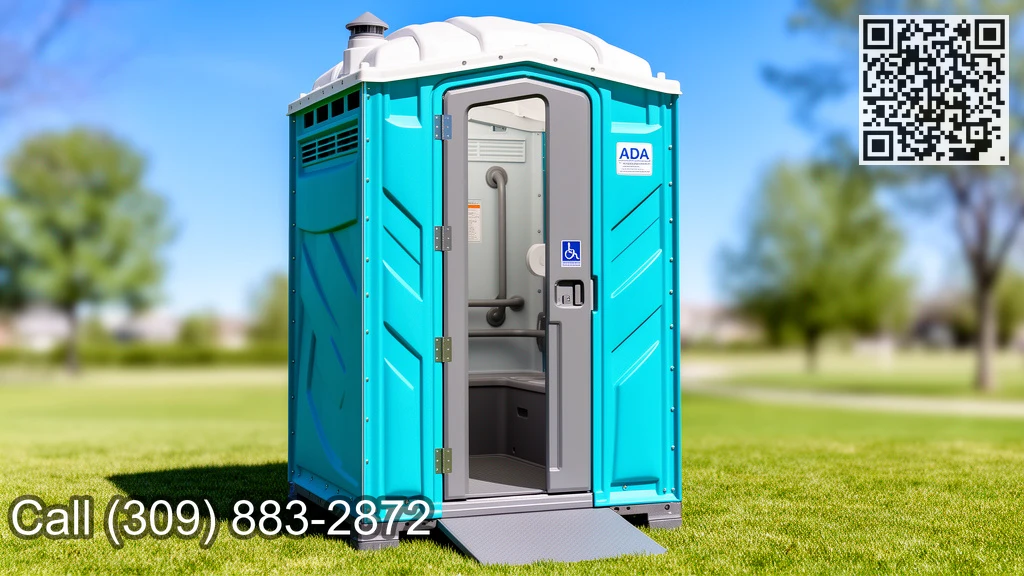
That appears simple, yet it matters for more than compliance. At a crowded event, people require to be able to discover the appropriate unit swiftly, without asking personnel to resolve a standard dignity concern. Clear recognition lowers confusion and conserves time.
Still, a marked door does not cure a bad layout. I have actually enjoyed visitors roll or walk toward a system with the accessibility sign, just to find the path obstructed by mud, loose cable television covers, or group control secure fencing that was added later in the day. The label claimed one thing. The site claimed another.
That gap is worth taking notice of because it is common at temporary occasions. Unlike permanent structures, occasion sites alter by the hour. Deliveries show up. Generators obtain repositioned. Waste containers overflow into blood circulation paths. A crew participant parks a cart in the wrong place for twenty mins, which comes to be two hours. Ease of access can wander out of conformity even if the original placement was sound.
What event organizers ought to validate before visitors arrive
If you are accountable for the toilet plan, there are a few factors that should have a hard appearance prior to gateways open.
- Count each restroom collection separately and verify that at the very least 5 percent of the single-user mobile systems in that collection are accessible.
- Make sure every easily accessible unit is marked with the International Icon of Accessibility.
- Check the path to the unit, not simply the system itself, and validate the entrance is accessible.
- If a ramp or landing is part of the configuration, verify that it adheres to ADA technical requirements.
- Look at the clearance around the door and inside the unit with the technological demands in mind, specifically transforming and navigating space.
That is a brief checklist, yet it captures the errors I see usually. The very first mistake is undercounting due to the fact that someone looked at the whole event as opposed to the collection. The second is thinking the vendor alone manages compliance. The 3rd is concentrating on delivery and missing confirmation after the site has been totally constructed out.
The route is part of the restroom
This factor deserves its own focus due to the fact that it is where lots of great objectives fail.
An ada portable bathroom does not stand alone. It needs to be part of an available course of traveling and have an available entry. That may seem evident, but temporary events are infamous for developing uncomfortable transitions. Crushed rock obtains spread unevenly. Temporary floor covering finishes before the toilet zone. An unit is parked just beyond a lip or incline that looked safe during load-in and really feels impossible when browsing with a wheelchair.
The federal standard does not ask whether a visitor can theoretically reach the toilet with aid. It calls for an obtainable route and entrance. Those are fundamental aspects of usability, not optional extras.
For organizers, this implies the bathroom discussion needs to happen early adequate to influence website format. If you wait till completion, you are typically attempting to address availability with whatever area continues to be. That usually results in unpleasant positionings behind phases, close to dumpsters, or at the edge of unequal ground where bigger units occur to fit. Already, you are no longer preparing for gain access to. You are improvisating around constraints.
There is likewise a human side to course preparation that does disappoint up well on a site map. Individuals do not experience the event from a bird's-eye view. They relocate through it in weather, crowds, noise, and fatigue. A route that appears appropriate in a quiet morning examination can come to be much more difficult once lines type and sightlines go away. An ada handicap obtainable mobile washroom need to not really feel like an unique exploration tucked away from every little thing else.
Temporary does not mean exempt
One of the much more stubborn misconceptions in event operations is that temporary arrangements obtain more freedom due to the fact that they are not irreversible building and construction. Around, that presumption creates trouble.
The Access Board has actually especially suggested that the collection need uses also at short-lived occasions. So if a festival, reasonable, show, area event, or pop-up market is relying on portable single-user systems, accessibility is still in play. The truth that the occasion lasts a day or a weekend does not remove the standard.
There is one nuance worth understanding since it comes up in conversations with service providers and site managers. The older 1991 ADA layout criteria identified mobile commode units at construction websites used exclusively by building employees and spared those from the cited portable-toilet availability scoping requirement. That is not the very same thing as claiming mobile restroom access does not matter normally. For basic mobile commode leasings at public-facing events, the accessible-unit need remains.
That difference is simple to blur if somebody has functioned mostly around construction logistics and then applies the very same presumptions to a public event. The use instance matters. So does that the facilities are for.
Compliance theoretically versus compliance in the field
There is a distinction in between ordering the best product and delivering an available experience.
An ada certified portable toilet can shed its effectiveness if the lock is difficult to operate, if the door swing is obstructed by website mess, or if the obtainable unit ends up being the unofficial family members restroom, storage wardrobe, or VIP overflow since it has even more room. The federal requirements in the validated context talk to the scoping and technological needs, not to every operational practice that can threaten access. However from an event-management standpoint, operations still matter.
This is where compassion is greater than tone. It is a preparation tool.
A visitor who requires an easily accessible toilet is already doing psychological math before they ask anybody for help. Exactly how far is it. Will certainly it be available. Will I have enough room to enter and turn. Will certainly there be a group in front of it. Will a personnel understand what I am requesting for. When coordinators deal with the ada certified mobile bathrooms as one line item amongst lots of, guests feel the difference.
The much better strategy is to assume in regards to dependability. If someone adheres to the indications to the marked device, can they actually utilize it without arrangement, without rerouting via the rear of house, and without needing a complete stranger to relocate barriers out of the way? That is a far more straightforward test than simply validating the billing consisted of one ada portable toilet.
Why cluster planning transforms the spending plan conversation
The 5 percent policy at each collection can affect budgets in means novice organizers do not expect. If you have numerous small bathroom collections spread throughout a site, the easily accessible count might boost compared to a single central bank. That does not indicate the requirement is unjust. It implies ease of access is tied to just how individuals experience the occasion, not just https://gunnerstcp945.scriblorax.com/posts/ada-handicap-obtainable-portable-toilet-rental-for-inclusive-event-access exactly how devices is amounted to on a spreadsheet.
I have actually seen teams reply to that reality in two very various ways. One technique is defensive: they deal with every easily accessible unit as a costly exemption and keep attempting to upgrade around it. The various other method is smarter: they reconsider cluster positioning, reduce unnecessary fragmentation, and coordinate bathroom locations with major flow courses from the start. The 2nd team usually invests even more sensibly because they are resolving the appropriate trouble earlier.
This also impacts supplier discussions. If you ask late while doing so for "one ADA unit," you might be forcing a spot. If you clarify the collection layout and ask how to align the washroom plan with ada mobile toilet needs, the conversation gets even more functional and less reactive.
The criteria rest inside a broader enforcement climate
Accessibility compliance is not fading right into the background. If anything, organizations are seeing a more comprehensive conformity setting. A recent example outside portable washrooms is the Department of Justice assistance on internet and mobile availability for state and local governments, with prolonged target dates encountering 2027 for bigger entities. That guidance is not about short-term event bathrooms, yet it reflects a larger truth: ADA conformity stays active, visible, and enforceable throughout sectors.
For occasion coordinators, that broader environment should be a hint to take physical ease of access seriously instead of treating it as a box to inspect. Portable cleanliness may seem like a small operational detail alongside ticketing, security, or amusement. For the person that can not use the washroom offered, it is not a small information at all.
Common judgment calls that should have real attention
Not every event website is neat and level. Parks, fairgrounds, shut streets, and open fields all present restraints. The criteria do not go away when the website gets messy, however real-world preparation does include judgment. The strongest groups I have dealt with ask more difficult questions earlier.
They ask whether a collection needs to relocate more detailed to a recognized accessible path instead of forcing a ramp service into a bad location. They ask whether a fenced queue is going to tighten the method later on in the day. They ask who has authority to accept any kind of field changes after installment, due to the fact that "just moving the systems a little" can reverse conformity quickly.
They also recognize that an accessible unit must not become isolated. In some cases a coordinator positions the bigger unit well away from the primary bank due to the fact that it fit better there. On a representation, that may look efficient. On the ground, it can feel setting apart and inconvenient. Accessibility is not only regarding technical conformity. It is likewise about equitable involvement, which often indicates keeping the easily accessible choice meaningfully integrated into the occasion layout.
Questions worth asking your vendor and site team
A brief discussion before delivery can protect against a lengthy day of solutions later.
- How many restroom collections will there be, and the number of accessible units are required in every one to meet the 5 percent rule?
- Where will the easily accessible course to every device begin and finish when fencing, floor covering, and tools remain in place?
- Will any kind of ramps or touchdowns be used, and if so, who is confirming they meet ADA technological requirements?
- How will the available systems be determined on website so visitors can locate them easily?
- Who is accountable for the last area check nevertheless various other occasion elements are installed?
Those questions are not legal movie theater. They are operational safeguards. Most accessibility failures at short-term occasions do not originate from unique technical conflicts. They originate from average control spaces in between the washroom supplier, the website team, and the occasion manager.
What a thoughtful arrangement looks like
A thoughtful configuration is not always the fanciest one. It is the one where the accessible washroom plan was considered early, installed meticulously, and shielded throughout the event.
The ada compliant obtainable mobile toilets are counted properly within each collection. The units are identified. The course is functional. The entryway functions as intended. The door area and indoor clearances are not endangered by rash positioning. Team understand where the systems are and do not treat them as storage area or overflow. If site problems change, someone checks that accessibility did not alter with them.
That is the sort of planning visitors seldom notice, which is exactly the factor. Excellent ease of access commonly really feels plain because it gets rid of rubbing before anyone has to call it. Individuals can merely go to the event, appreciate themselves, and use the bathroom with dignity.
For organizers, that must be the standard to go for. Not just leasing an ada-compliant portable toilet, however producing a setup that in fact helps individuals that require it. Temporary occasions teem with relocating parts. Availability needs to be just one of the items that remains steady.
 Ask ChatGPT
 Ask Grok
 Ask Perplexity
 Ask Claude
 Ask Google AI
 Ask You